
Deutsch: Overtourismus / Español: Overturismo / Português: Overturismo / Français: Sur-tourisme / Italiano: Sovraturismo
Over-tourism refers to the phenomenon where a destination experiences an excessive influx of tourists, leading to negative impacts on the local environment, infrastructure, and quality of life for residents. This imbalance disrupts the socio-economic and ecological equilibrium, often resulting in long-term degradation of cultural heritage and natural resources. The term has gained prominence as global travel accessibility has increased, exacerbating pressures on popular destinations.
General Description
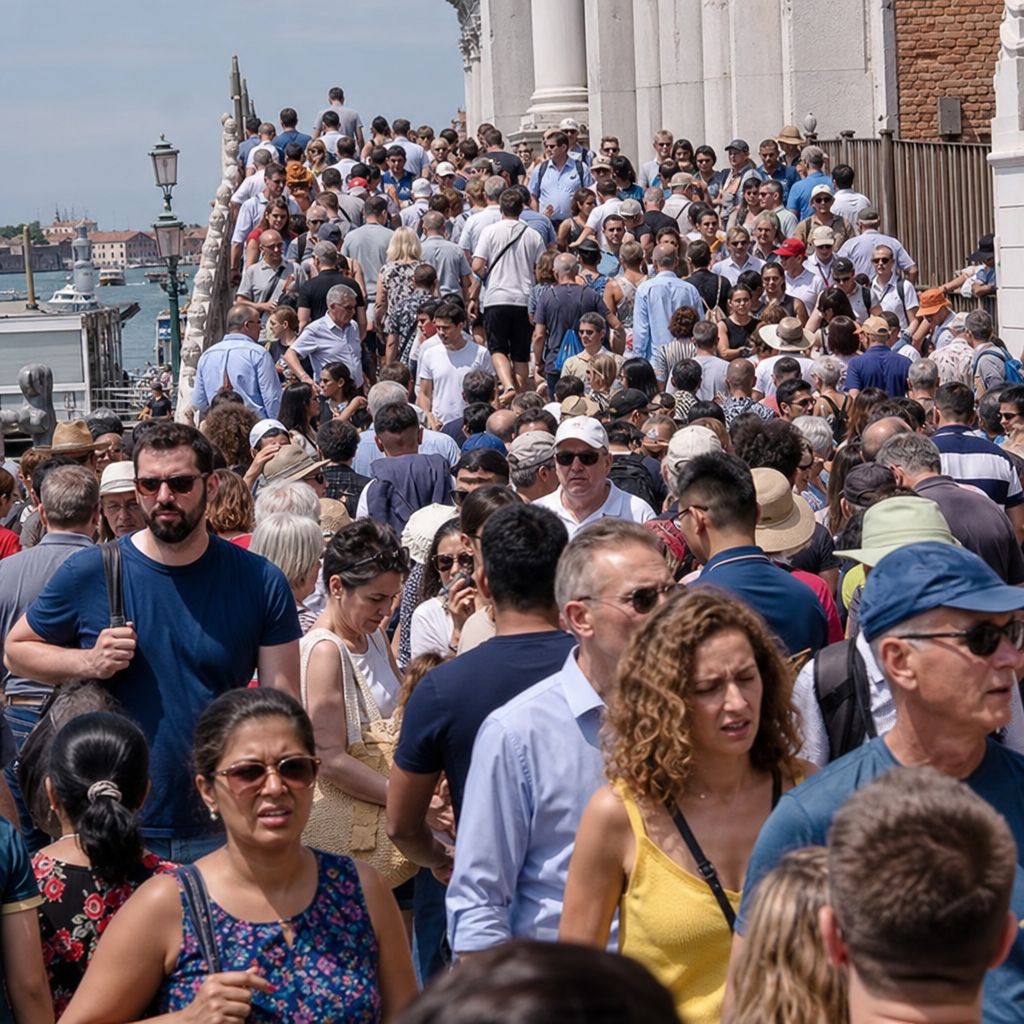
Over-tourism occurs when the volume of visitors to a destination exceeds its carrying capacity, defined as the maximum number of people a location can sustain without compromising its environmental, social, or economic integrity. This concept is closely linked to the principles of sustainable tourism, which advocate for balanced development that preserves resources for future generations. The phenomenon is not limited to urban centers but also affects rural areas, coastal regions, and protected natural sites, where unregulated tourism can lead to irreversible damage.
The drivers of over-tourism include the proliferation of low-cost air travel, the rise of digital platforms facilitating short-term rentals, and the concentration of tourism demand in a limited number of "bucket-list" destinations. Social media further amplifies this trend by popularizing specific locations, creating sudden surges in visitor numbers. Unlike mass tourism, which implies large-scale but often managed visitor flows, over-tourism specifically denotes a state of unsustainability where the negative externalities outweigh the benefits for the host community.
Economic dependence on tourism exacerbates the problem, as local stakeholders may prioritize short-term revenue over long-term sustainability. This creates a paradox where destinations become victims of their own success, facing challenges such as housing shortages, increased cost of living, and the displacement of local populations. The environmental consequences include pollution, habitat destruction, and strain on water and waste management systems, particularly in fragile ecosystems like coral reefs or alpine regions.
Historical Development
The concept of over-tourism emerged in the early 21st century as a response to the rapid growth of global tourism, which outpaced the capacity of many destinations to manage visitor flows. The United Nations World Tourism Organization (UNWTO) reported that international tourist arrivals grew from 25 million in 1950 to 1.5 billion in 2019, with projections suggesting further increases. This exponential growth highlighted the limitations of traditional tourism management models, which were often reactive rather than proactive.
Early discussions on over-tourism were framed within the broader discourse on sustainable tourism, a movement that gained traction in the 1990s. However, the term itself was popularized around 2017, coinciding with high-profile incidents such as the closure of Thailand's Maya Bay due to environmental degradation or the protests by residents in cities like Barcelona and Venice against unchecked tourism. These events underscored the urgency of addressing over-tourism as a distinct and pressing issue, rather than a mere byproduct of mass tourism.
Technical and Operational Indicators
Over-tourism is measured using a combination of quantitative and qualitative indicators. Key metrics include visitor density (number of tourists per square kilometer), the ratio of tourists to residents, and the strain on local infrastructure, such as water consumption or waste generation per capita. For example, Venice, Italy, has reported tourist-to-resident ratios exceeding 100:1 during peak seasons, far surpassing sustainable thresholds. The UNWTO and other organizations have developed frameworks to assess carrying capacity, though these remain context-dependent and vary by destination type.
Qualitative indicators focus on resident perceptions, cultural erosion, and the loss of authenticity in tourist experiences. Surveys and participatory assessments are often used to gauge local sentiment, with negative feedback serving as an early warning sign of over-tourism. Additionally, economic indicators such as the leakage rate—the proportion of tourism revenue that leaves the destination—can signal unsustainable practices, particularly in developing economies where foreign-owned businesses dominate the sector.
Norms and Standards
Several international frameworks address over-tourism, though no single standard exists. The UNWTO's Global Code of Ethics for Tourism (2001) provides guidelines for sustainable tourism development, emphasizing the need to balance visitor flows with local well-being. The European Union's "European Tourism Indicators System" (ETIS) offers a toolkit for destinations to monitor sustainability, including metrics for over-tourism. At the national level, countries like Spain and Iceland have implemented visitor caps or taxes to mitigate the impacts of over-tourism (e.g., Barcelona's tourist tax or Iceland's "Icelandic Pledge" for responsible travel).
Application Area
- Urban Destinations: Cities such as Barcelona, Amsterdam, and Dubrovnik have implemented measures like short-term rental bans, visitor quotas, and marketing campaigns to redirect tourists to less crowded areas. These strategies aim to preserve urban livability and cultural heritage while maintaining tourism revenue.
- Natural and Protected Areas: National parks and UNESCO World Heritage Sites, including Machu Picchu and the Galápagos Islands, have introduced timed entry systems, visitor limits, and mandatory guided tours to reduce environmental degradation. These measures are critical for conserving biodiversity and preventing habitat loss.
- Coastal and Island Destinations: Regions like Bali and the Balearic Islands face challenges such as water scarcity and waste management due to over-tourism. Solutions include limiting cruise ship arrivals, enforcing strict zoning laws, and promoting off-season travel to distribute visitor pressure more evenly.
- Cultural and Historical Sites: Destinations like Angkor Wat and the Colosseum have adopted dynamic pricing and advance booking systems to manage crowds. These approaches help protect fragile structures while ensuring a quality experience for visitors.
Well Known Examples
- Venice, Italy: The city has become a symbol of over-tourism, with annual visitor numbers exceeding 20 million in a city of just 50,000 residents. Measures such as a day-tripper tax, cruise ship bans in the historic center, and restrictions on short-term rentals have been introduced to mitigate the impacts. Despite these efforts, the city continues to struggle with depopulation and the erosion of its cultural identity.
- Barcelona, Spain: Resident protests against over-tourism led to the implementation of a tourist tax and a moratorium on new hotel licenses. The city has also launched campaigns to promote lesser-known neighborhoods and cultural events, aiming to distribute tourists more evenly across the metropolitan area.
- Maya Bay, Thailand: The beach, made famous by the film "The Beach," was closed indefinitely in 2018 due to coral reef damage and ecosystem degradation. The closure allowed for ecological recovery, and the site has since reopened with strict visitor limits and a ban on boats anchoring near the shore.
- Machu Picchu, Peru: The iconic Inca citadel has implemented a timed entry system and limited daily visitor numbers to 2,500. Additionally, the introduction of mandatory guided tours has improved visitor management and reduced environmental impact.
- Amsterdam, Netherlands: The city has taken aggressive steps to combat over-tourism, including banning new tourist shops in the city center, redirecting marketing efforts to promote lesser-known attractions, and introducing a tourist tax. These measures aim to preserve the city's livability and cultural authenticity.
Risks and Challenges
- Environmental Degradation: Over-tourism accelerates pollution, habitat destruction, and resource depletion, particularly in fragile ecosystems. For example, coral reefs in destinations like the Maldives and Australia's Great Barrier Reef are threatened by increased visitor numbers, leading to physical damage and chemical pollution from sunscreens and waste.
- Cultural Erosion: The commodification of local traditions and the displacement of residents can lead to the loss of cultural authenticity. In cities like Venice, the influx of tourists has driven out long-term residents, transforming historic neighborhoods into tourist-centric zones devoid of local character.
- Economic Dependence: Destinations that rely heavily on tourism revenue are vulnerable to economic shocks, such as pandemics or geopolitical instability. The COVID-19 pandemic demonstrated this risk, as many over-touristed destinations faced severe economic downturns due to travel restrictions.
- Social Tensions: The strain on local infrastructure and resources can lead to resentment among residents, resulting in protests and conflicts. In Barcelona, for example, anti-tourism graffiti and demonstrations have become common, reflecting the growing frustration of local communities.
- Infrastructure Overload: Over-tourism places excessive pressure on transportation, waste management, and water supply systems, leading to inefficiencies and service breakdowns. In destinations like Bali, water shortages have become a critical issue due to the high demand from hotels and resorts.
- Regulatory and Governance Challenges: Implementing effective policies to combat over-tourism requires coordination among multiple stakeholders, including governments, businesses, and local communities. Conflicting interests and lack of political will can hinder the adoption of sustainable practices, as seen in destinations where short-term economic gains are prioritized over long-term sustainability.
Similar Terms
- Mass Tourism: Refers to the large-scale movement of tourists to popular destinations, often characterized by standardized experiences and high visitor volumes. Unlike over-tourism, mass tourism does not inherently imply unsustainability, though it can contribute to the problem if not managed properly.
- Sustainable Tourism: A broad concept that emphasizes tourism development that meets the needs of the present without compromising the ability of future generations to meet their own needs. Over-tourism is often discussed as a failure of sustainable tourism practices, particularly in destinations where visitor management is inadequate.
- Ecotourism: A form of tourism that focuses on responsible travel to natural areas, with an emphasis on conservation and supporting local communities. While ecotourism aims to minimize negative impacts, it can still contribute to over-tourism if visitor numbers exceed the carrying capacity of the destination.
- Responsible Tourism: A movement that encourages tourists, businesses, and governments to take responsibility for the impacts of tourism. It shares goals with sustainable tourism but places greater emphasis on individual and collective accountability. Over-tourism is often cited as a consequence of irresponsible tourism practices.
Summary
Over-tourism represents a critical challenge for the global tourism industry, driven by the unsustainable concentration of visitors in popular destinations. Its impacts extend beyond environmental degradation to include social, cultural, and economic disruptions, threatening the long-term viability of affected locations. Addressing over-tourism requires a multifaceted approach, combining regulatory measures, community engagement, and innovative management strategies to redistribute visitor flows and promote sustainable practices. While no single solution exists, the examples of cities and sites that have successfully implemented visitor caps, taxes, and marketing redirection demonstrate that proactive management can mitigate the negative effects of over-tourism. The future of tourism depends on balancing growth with sustainability, ensuring that destinations remain livable and authentic for both residents and visitors.
--