
Deutsch: Arbeitsplatz im Tourismus / Español: Lugar de trabajo en turismo / Português: Local de trabalho em turismo / Français: Lieu de travail dans le tourisme / Italiano: Luogo di lavoro nel turismo
Tourism Workplace in the context of travel refers to the environments and locations where individuals are employed within the tourism industry. This can encompass a wide range of settings, from offices where travel deals are brokered to dynamic outdoor locations where adventure tours are conducted.
Description
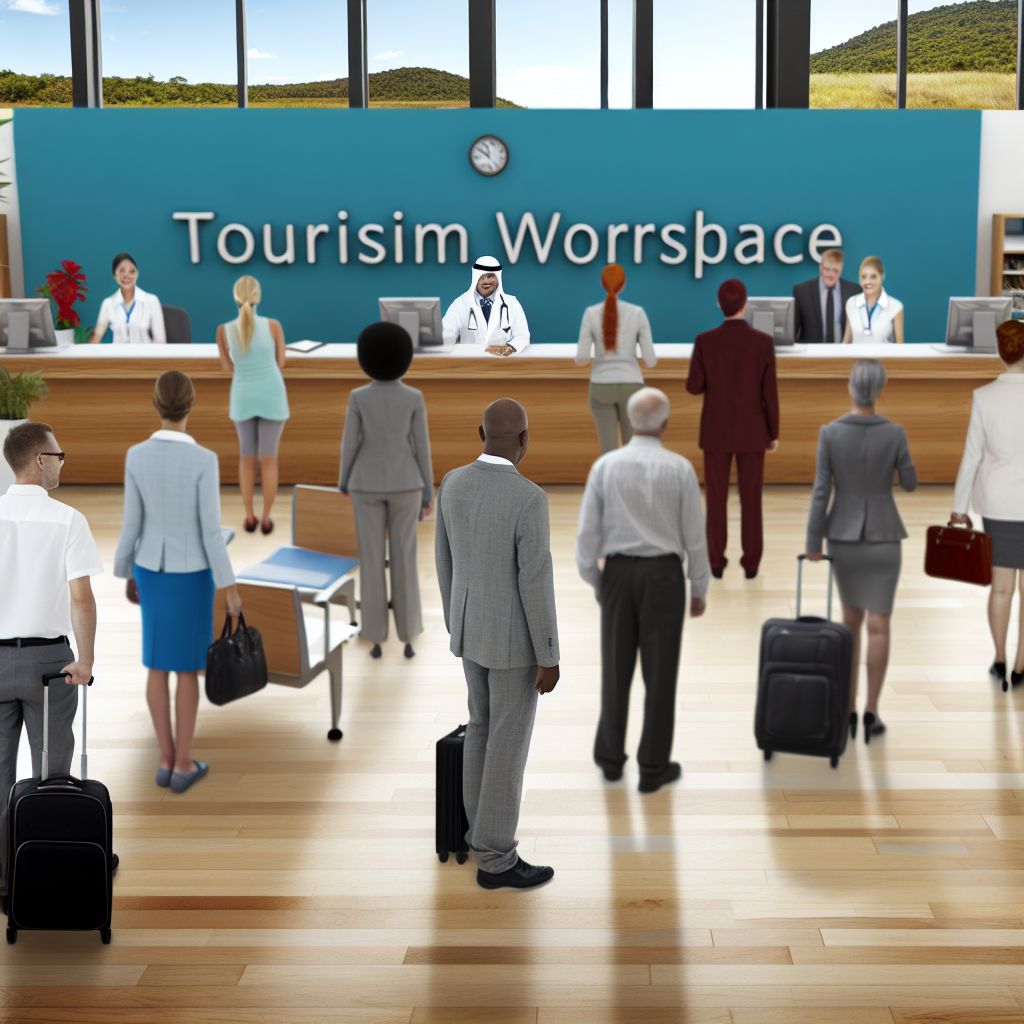
The tourism workplace varies significantly based on the nature of the job and the sector of the industry. It could be a traditional office setting, a remote beach resort, a bustling city hotel, or even a moving vehicle, such as a cruise ship or a tour bus. Employees in the tourism sector might include travel agents, tour operators, hospitality staff, and adventure guides, among others.
The diversity of workplaces in tourism reflects the industry's broad scope, which includes travel planning, hospitality, entertainment, and information services. Workers in this field might interact directly with tourists, manage operations behind the scenes, or even perform roles remotely, such as travel bloggers or marketing professionals for travel agencies.
Application Areas
Various roles within the tourism workplace include:
- Travel Agencies and Tour Companies: Where trips and excursions are organized and sold.
- Hotels and Resorts: Covering all aspects of hospitality management and guest services.
- Transportation Services: Including airlines, cruise ships, and local transport operators that facilitate tourist travel.
- Attractions and Cultural Sites: Where staff manage visitor experiences and maintain venues.
Well-Known Examples
Examples of tourism workplaces include:
- Travel Agency Offices: Where agents provide travel advice, make bookings, and organize tours.
- Hotel Front Desks and Operations: The hub of hotel activities where staff interact with guests and coordinate services.
- Cruise Ships: Floating resorts offering a variety of employment opportunities from hospitality to entertainment.
- Historic Site Management Offices: Where the preservation, management, and interpretation of cultural or natural heritage sites are coordinated.
Treatment and Risks
Working in the tourism industry can be highly rewarding, but it also comes with specific challenges. Employees often face long hours, especially during peak travel seasons, and may deal with high levels of stress from ensuring that tourists have a positive experience. Additionally, jobs that require constant interaction with the public can expose workers to varied and sometimes demanding social interactions.
Similar Terms
- Hospitality Industry: While it overlaps significantly with tourism, this term specifically refers to sectors providing lodging, meals, and other services for travelers and tourists.
- Service Sector: Broader category that includes all service-oriented jobs, not just those related to tourism.
- Adventure Tourism: A niche within the tourism industry that specifically involves guiding and organizing outdoor adventure activities.
Summary
The tourism workplace is diverse and multifaceted, with environments ranging from conventional office settings to exotic travel locations. It offers a variety of roles and is integral to the functioning of the global travel industry, supporting economies and enhancing cultural exchanges worldwide.
--
Related Articles to the term 'Tourism Workplace' | |
| 'Affiliate' | ■■■■■■■■■■ |
| In the travel context, an affiliate refers to an individual, website, or company that promotes travel-related . . . Read More | |
| 'Categorization' | ■■■■■■■■■■ |
| Categorization in the travel context refers to the systematic classification of travel-related services, . . . Read More | |
| 'Pricing' | ■■■■■■■■■■ |
| Pricing in the travel context refers to the strategy and structure of determining the cost of travel-related . . . Read More | |
| 'Green Globe' | ■■■■■■■■■■ |
| In the travel industry, Green Globe is a globally recognized certification program dedicated to promoting . . . Read More | |
| 'Responsible Travel' | ■■■■■■■■■■ |
| Responsible Travel: Responsible travel is a form of tourism that prioritises minimising negative impacts . . . Read More | |
| 'Classification' | ■■■■■■■■■■ |
| Classification in the travel context refers to the system of categorizing various aspects of travel and . . . Read More | |
| 'Category' | ■■■■■■■■■■ |
| Category is a specifically defined division in a classification System (class). Can apply to Cruise Ship . . . Read More | |
| 'Maintenance' | ■■■■■■■■■■ |
| \'Maintenance\' refers to the regular upkeep, repair, and servicing of various components, facilities, . . . Read More | |
| 'Consumer' | ■■■■■■■■■ |
| Consumer: A consumer is a person or group of people, such as a household, who are the final users of . . . Read More | |
| 'Location' | ■■■■■■■■■ |
| Location in the travel context refers to the specific place or area where an activity, attraction, accommodation, . . . Read More | |